A redesigned module in which students train the profession in an emerging technology
The conventional Professional Practice module is an exercise in transmission. The profession holds the knowledge. The module conveys it. Students are taught how offices are structured, how work is procured, and how a career is assembled. Practitioners are invited in to describe their world, and students listen.
That model holds for most forms of professional knowledge. It does not hold for emerging technology.
Artificial intelligence entered architectural practice faster than practice could absorb it. Many regional firms recognised the opportunity. Few had the time, the staffing, or the confidence to investigate it. For this one body of knowledge, the gap did not run from the profession to the student. It ran in the opposite direction.
The module was redesigned around that inversion. Students were trained first in subject-specific AI methods. They then worked with regional practices, not to be taught, but to teach. Each team joined a host practice to identify a real operational problem, and then developed an AI-based response to it.
The cohort of 45 students was drawn from three programmes: Architecture, Architectural Technology, and Construction Management. Teams were mixed by design. A practice does not consist of architects alone, and the problems a practice reports are rarely confined to a single discipline.
The pedagogic ambition was larger than the technology. A student who must diagnose a client's problem, agree a scope, build a solution, and hand it over has encountered the full condition of professional work. Not a description of that condition, delivered in a lecture theatre, but the condition itself.
Three conditions made the inversion viable:
That sequence was therefore non-negotiable: learn the technology first, then apply it in a setting where the consequences are real.
The module runs in four progressive stages. Each stage depends strictly on the one before it:
Students were trained in AI methods selected specifically for architectural relevance. Large language models were addressed as reasoning and drafting instruments. AI agents were addressed as tools capable of acting within software rather than merely producing text. Generative image workflows were addressed as a means of controlled visual iteration, with attention to their limits as well as their capabilities.
The framing throughout was subject-specific. Students were not taught prompt technique in the abstract. They were taught what these systems can and cannot do within an architectural process.
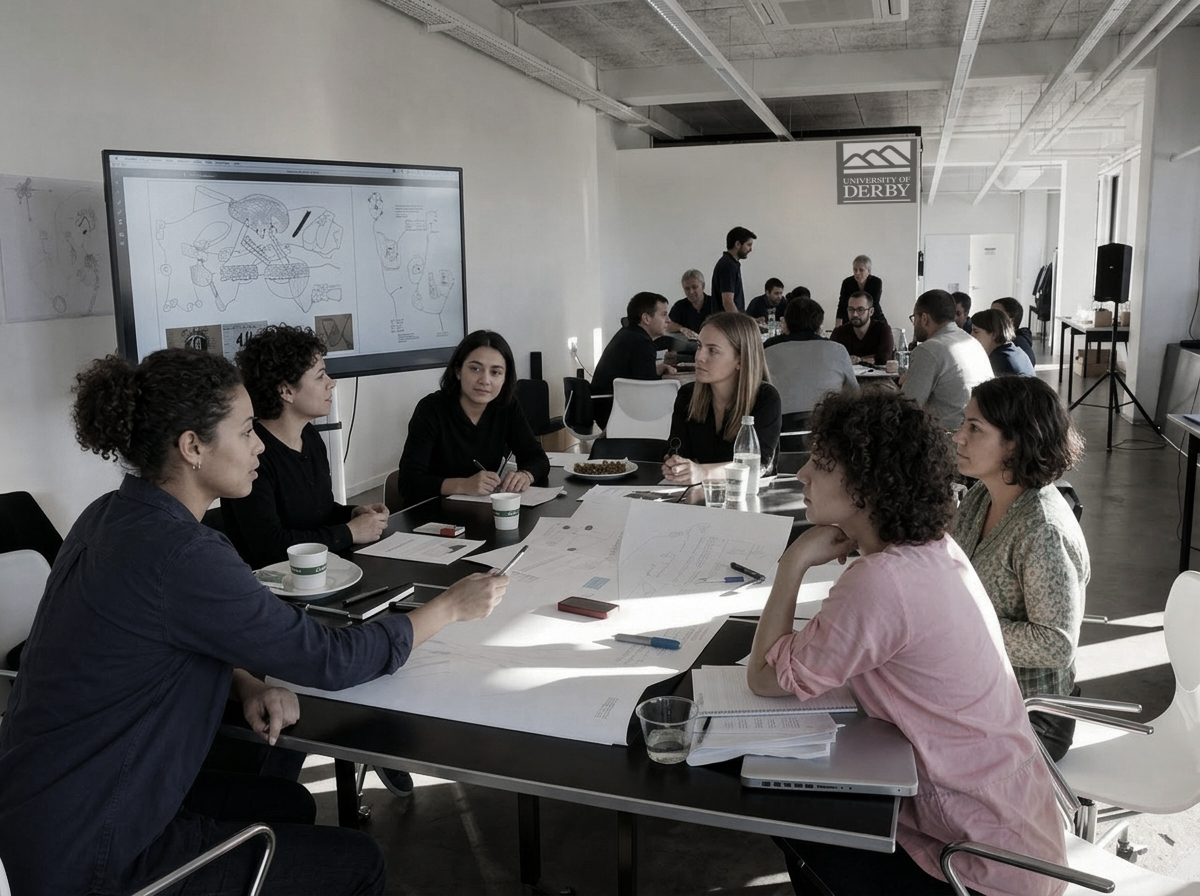
A structured workshop brought practices and students together at the University (Fig 1). This was not a networking event; it was a rigorous matching exercise.
Practices described their operational pressures. Students described their capabilities and interests. Teams of three to four were then formed against that mapping, so that each collaboration began with a plausible fit between a stated need and a demonstrated skill.
Teams were also composed across the three programmes. An architecture student, an architectural technology student, and a construction management student read the same practice differently. That difference was treated as an asset rather than a complication. Each team therefore had to reach a shared account of the problem before it could act.
The workshop performed a further function: it required students to communicate technical possibility to a non-specialist audience, in professional company, before any work had begun.
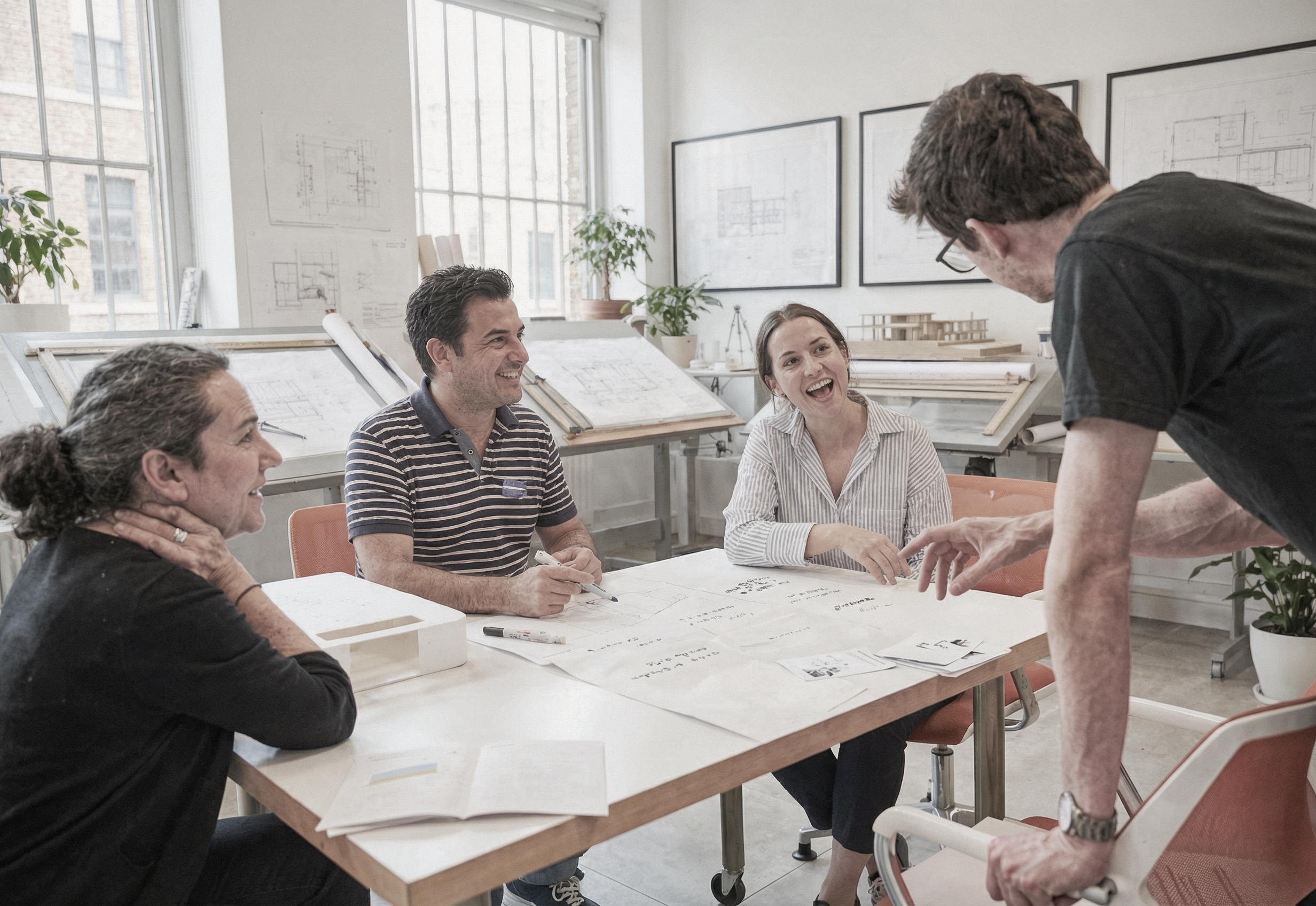
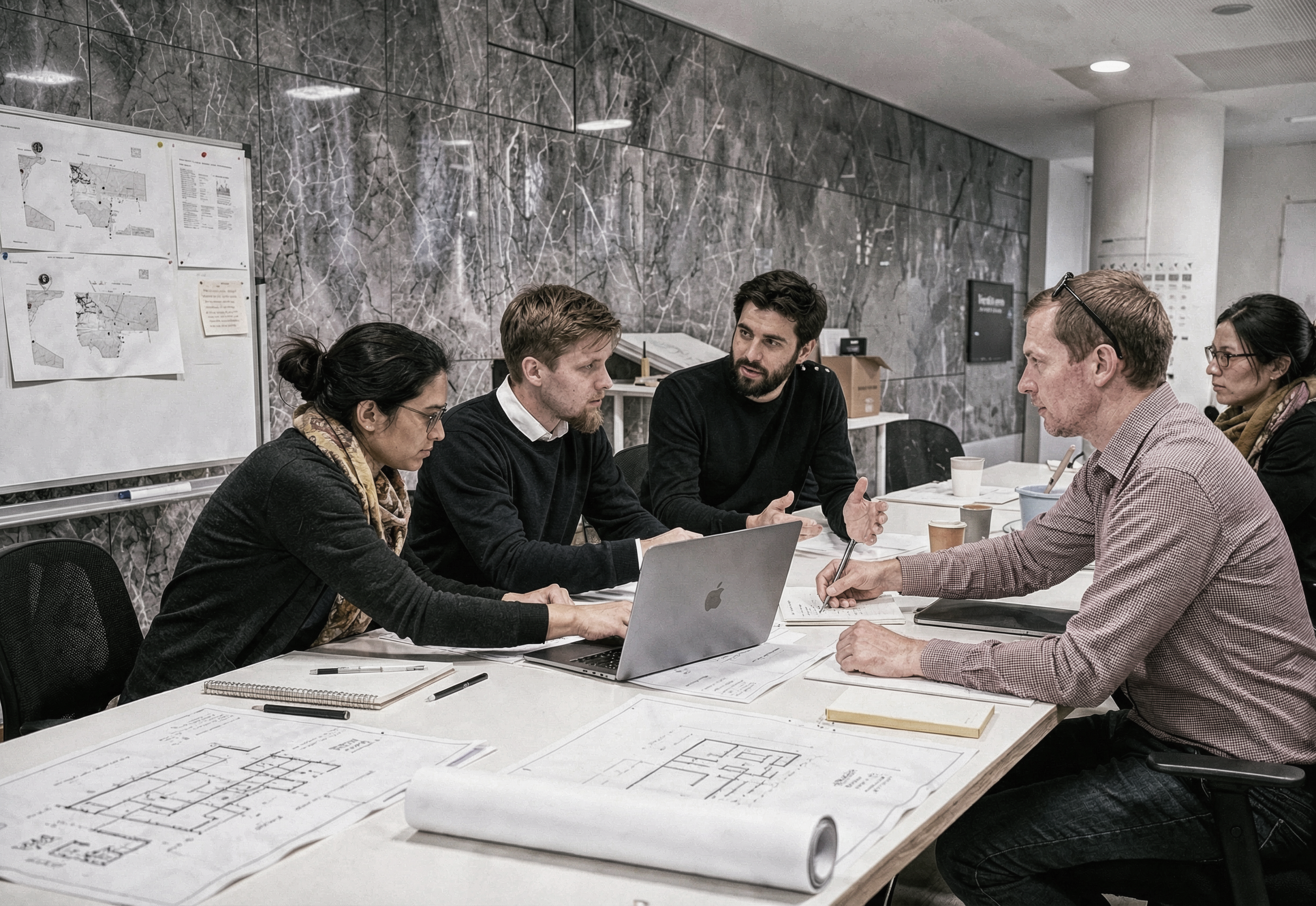
Teams then worked with their host practices, embedded in the offices of those practices (Fig 2, 3). The first task was not development; it was diagnosis.
Students had to establish what the practice actually did each day, where time was lost, and which of those losses were tractable. This required listening rather than proposing. It also required the discipline to reject their own preferred solution when it did not match the problem in front of them.
Practices are not uniform. A small residential studio and a mid-sized commercial firm do not share bottlenecks. Each team therefore arrived at a different brief, written jointly with its host.
The mixed composition of the teams proved valuable at this stage. Design bottlenecks, technical documentation bottlenecks, and programme or cost bottlenecks are not visible to the same observer. A team that could see all three produced a more accurate diagnosis than any single discipline would have reached alone.
Teams then built. Solutions ranged from workflow protocols to bespoke tool development.
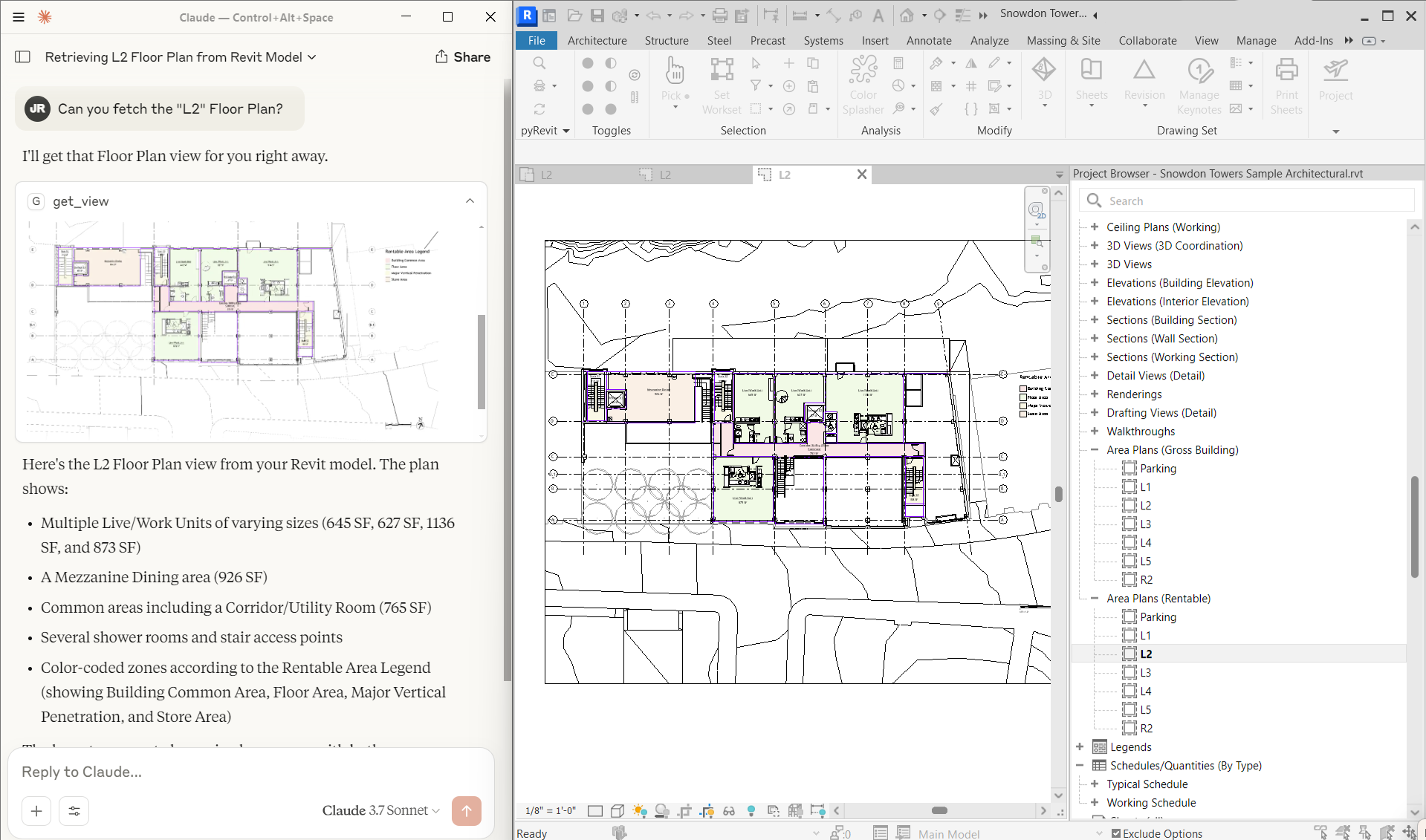
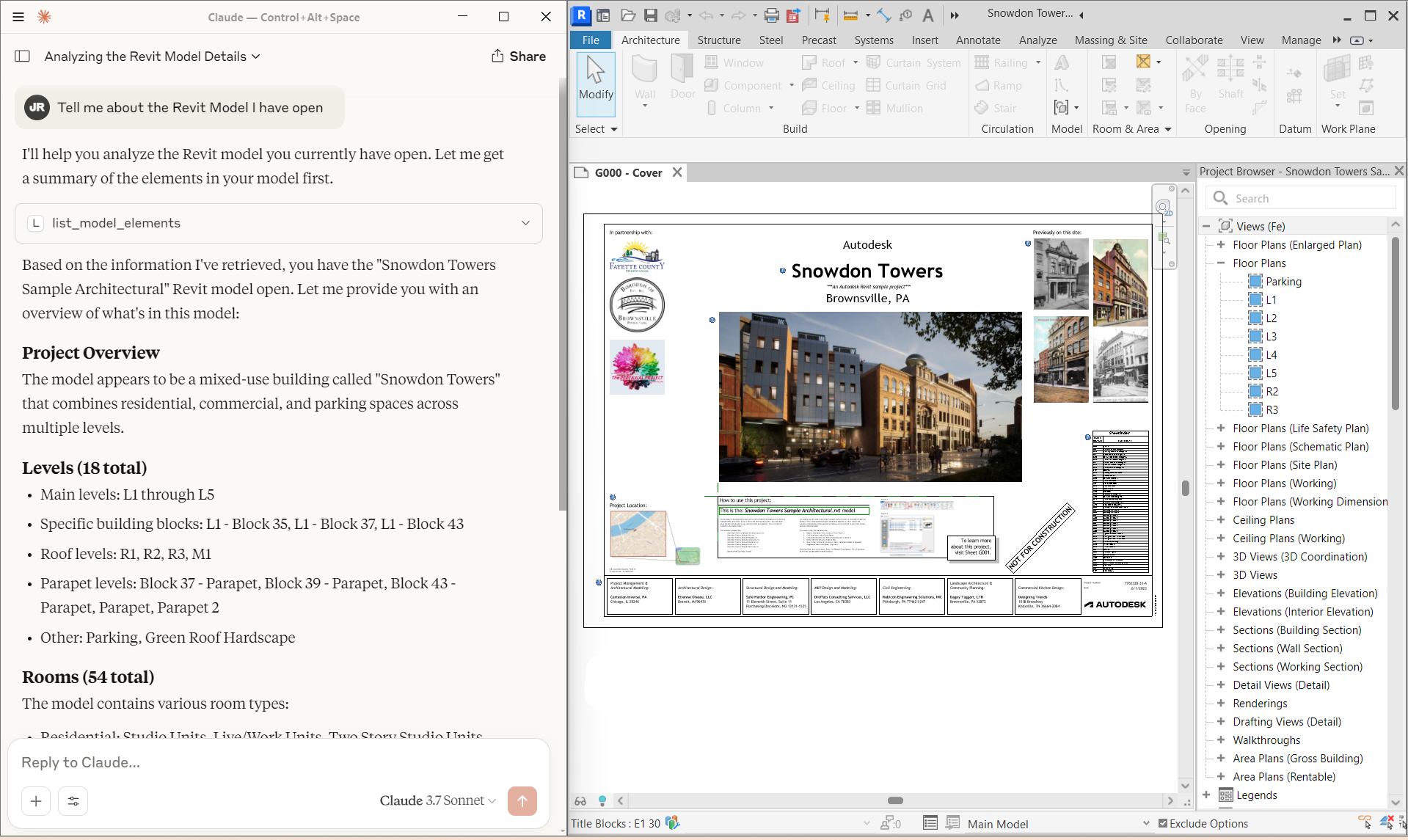
The most technically ambitious was developed by Piotr W., working with input from his host practice throughout. It is an integration connecting an AI assistant directly to Autodesk Revit through the Model Context Protocol (Fig 4, 5). The tool allows an architect to interrogate and operate on a live BIM model in natural language. It can retrieve a specified view, summarise model contents, and report on levels, rooms, and areas without the user leaving the software.
The significance of that work is worth stating plainly: it does not add AI alongside the architect's software. It places agentic AI inside the environment in which architects already spend their working days.
The practice specified the functionality it needed and tested each iteration. The tool remains in active use there today.
Each team concluded with a structured handover. Practitioners were trained in the workflow their team had developed, ensuring the capability remained in the practice once the module had ended.
The module was designed against three positions in learning theory. Each is visible in a different stage of the structure:
The four stages therefore correspond to a deliberate progression: learn the technology, learn to work across disciplinary difference, learn to diagnose a real need, and learn to build against it.
Forty-five students and fifteen regional practices took part. At a follow-up conducted six months after the module concluded, 75% of those practices were using at least one AI workflow developed with their student team.
That figure carries weight because adoption is a demanding measure. It is not satisfaction with the experience, and it is not an expression of intent. It records a practice changing how it works, on the strength of student-led development.
The six-month interval matters as much as the percentage. Novelty produces short-lived enthusiasm. A workflow still in use half a year later has survived the return to ordinary working pressure.
Three further effects are worth recording:
The module rests on a single argument: where a technology is genuinely new, the student is not necessarily the junior party, and the curriculum should be honest about that. Five claims follow from the work.
Structural Curriculum Innovation
It evidences curriculum innovation of a structural kind. The change is not the addition of AI content to an existing module. It is the reversal of the direction in which knowledge travels between the University and the profession. That reversal is what generates the pedagogic value, and it is what distinguishes the model from a technology elective.
Pedagogic Sequencing: Fluency Before Application
It evidences the pedagogic case for sequencing emerging technology before professional application. Students who meet a new technology for the first time in a working office will use it tentatively, if at all. Students who arrive already fluent can deploy it as designers deploy any other instrument. Fluency first, application second, is the principle the module defends.
Authentic Assessment & Durable Handover
It evidences authentic assessment. Success was not measured by a submitted artefact alone. It was measured by whether a practice could still use the work after the module had ended. Handover as an assessed outcome aligns academic judgement with professional consequence.
Cross-Disciplinary Teamwork by Design
It evidences cross-disciplinary teaching with a purpose. Architecture, architectural technology, and construction management students worked in the same teams because practice itself is not organised by discipline. Collaboration was a condition of completing the task, not an aspiration attached to it.
Demonstrable & Measurable Knowledge Exchange
It evidences meaningful knowledge exchange with the regional sector. Fifteen practices engaged, and three quarters had changed their working methods six months later. This is university–industry collaboration in which the flow of benefit is demonstrable, measured, and durable rather than assumed.